8013 - Syphilis, cerebrospinal
DBQ: Link to Index of DBQ/Exams by Disability for DC 8013
Acronyms: SY, SYPH, VDS
Definition
Syphilis is a contagious systemic disease caused by the slender, spiral organism, Treponema pallidum. The disease encompasses sequential clinical stages and years of latency. Cerebrospinal syphilis refers to involvement of the brain and spinal cord by the syphilis organism. The condition may also be described as neurosyphilis.

Etiology
The Treponema pallidum is a delicate, slender, spiral organism. The organism can be identified by a dark-field microscope or fluorescent techniques. The organism cannot survive for long periods outside the human body. Neurosyphilis, without symptoms, occurs prior to symptomatic neurosyphilis. The condition occurs in about 15% of those originally diagnosed with latent syphilis, in 12% of those with cardiovascular syphilis, and in 5% of those with benign tertiary syphilis.
Signs & Symptoms
The condition may be characterized by meningitis (see Diagnostic Code: 8019 Meningitis), or myelitis (see Diagnostic Code: 8010 Myelitis), and central nervous system (CNS) damage. Manifestations may include: general paresis; headaches; personality changes; and arm and leg weakness. Signs and symptoms of syphilis may also be present. (See Diagnostic Code: 6310 Syphilis.)


Tests
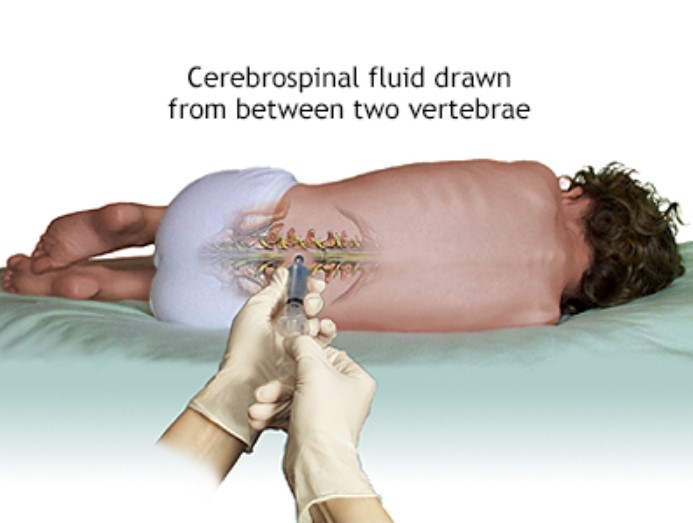
Diagnostic tests for syphilis include a clinical history and physical examination, serologic tests, investigations of sexual contacts and, if appropriate, dark-field examination of fluids from lesions. Cerebrospinal fluid (CSF) tests and x-ray examinations may also be done. Serologic tests for syphilis (STS) aid in diagnosing syphilis and other related treponemal diseases.


Treatment
Treatment may include antibiotics. Treatment may also include antipsychotics and an analgesic. The person is observed for Jarisch-Herxheimer reaction to the treatment.


Residuals
Cerebrospinal syphilis may appear 5 to 30 years after the primary infection. Repeated tests of cerebrospinal fluid (CSF) may be done. Progression of sclerosis of the posterior columns of the spinal cord may develop. (See Diagnostic Code: 8015 Tabes dorsalis.) Neurosyphilis, involving essential parts of the neurological system, generally affects patients in their 40s or 50s. It is manifested by progressive deterioration in behavior, and may mirror a psychiatric illness or Alzheimer's disease. Convulsions, difficulty communicating (verbally or otherwise), or transient weakness on one side of the body may occur. Common developments include: irritability; difficulty in concentrating; deterioration of memory; defective judgment; headache; insomnia; fatigue; and lethargy. The patient's hygiene and grooming deteriorate. Emotional lability, resulting in lack of strength, depression, and delusions of grandeur with lack of insight, may occur.
Special Considerations
-
None.
Notes
-
It is required for the minimum ratings for residuals under diagnostic codes 8000-8025, that there be ascertainable residuals. Determinations as to the presence of residuals not capable of objective verification, i.e., headaches, dizziness, fatigability, must be approached on the basis of the diagnosis recorded; subjective residuals will be accepted when consistent with the disease and not more likely attributable to other disease or no disease. It is of exceptional importance that when ratings in excess of the prescribed minimum ratings are assigned, the diagnostic codes utilized as bases of evaluation be cited, in addition to the codes identifying the diagnoses.
-
Disability in this field is ordinarily to be rated in proportion to the impairment of motor, sensory or mental function. Consider especially psychotic manifestations, complete or partial loss of use of one or more extremities, speech disturbances, impairment of vision, disturbances of gait, tremors, visceral manifestations, injury to the skull, etc. In rating disability from the conditions in the preceding sentence refer to the appropriate schedule. In rating peripheral nerve injuries and their residuals, attention should be given to the site and character of the injury, the relative impairment in motor function, trophic changes, or sensory disturbances. 38 CFR 4.120
-
With the exceptions noted, disability from the following diseases and their residuals may be rated from 10 percent to 100 percent in proportion to the impairment of motor, sensory, or mental function. Consider especially psychotic manifestations, complete or partial loss of use of one or more extremities, speech disturbances, impairment of vision, disturbances of gait, tremors, visceral manifestations, etc., referring to the appropriate bodily system of the schedule. With partial loss of use of one or more extremities from neurological lesions, rate by comparison with the mild, moderate, severe, or complete paralysis of peripheral nerves” 38 CFR 4.124a