7019 - Cardiac transplantation
DBQ: Link to Index of DBQ/Exams by Disability for DC 7019
Definition
Cardiac transplantation surgery refers to the transplantation of a functioning heart and placing it in a recipient.
Etiology
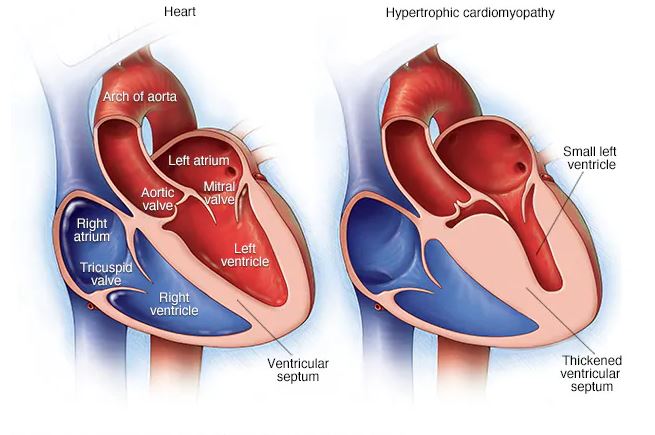
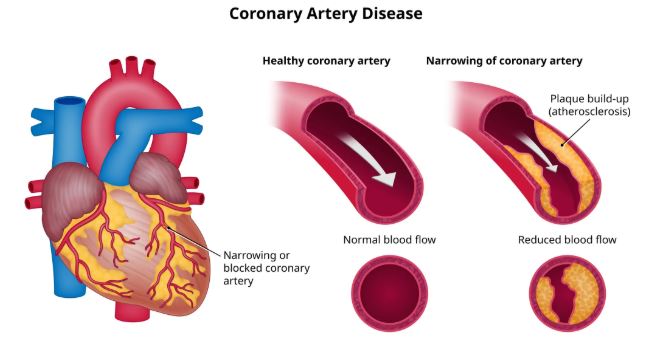
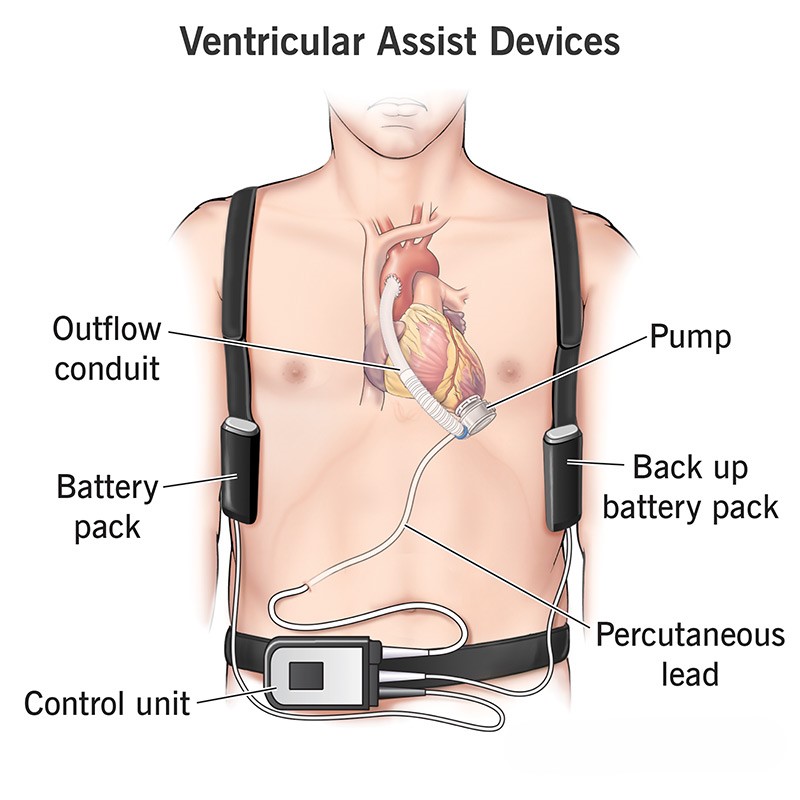
The following conditions existing in a transplant recipient are among the common indications for a transplant: cardiomyopathy (see Diagnostic Code: 7020 Cardiomyopathy); coronary artery disease (CAD); or being dependent on a cardiac-assist device.
Signs & Symptoms
Indications for the procedure include: end-stage heart disease that limits the outcome for survival over 2 years; and person who has not suffered other organ damage, and does not have other systemic disease such as diabetes mellitus and human immunodeficiency virus (HIV), and is also mentally alert. Other helpful indications to be a suitable candidate are that the person has a personal support system, a satisfactory psychological profile, and will be able to return to a functional life.
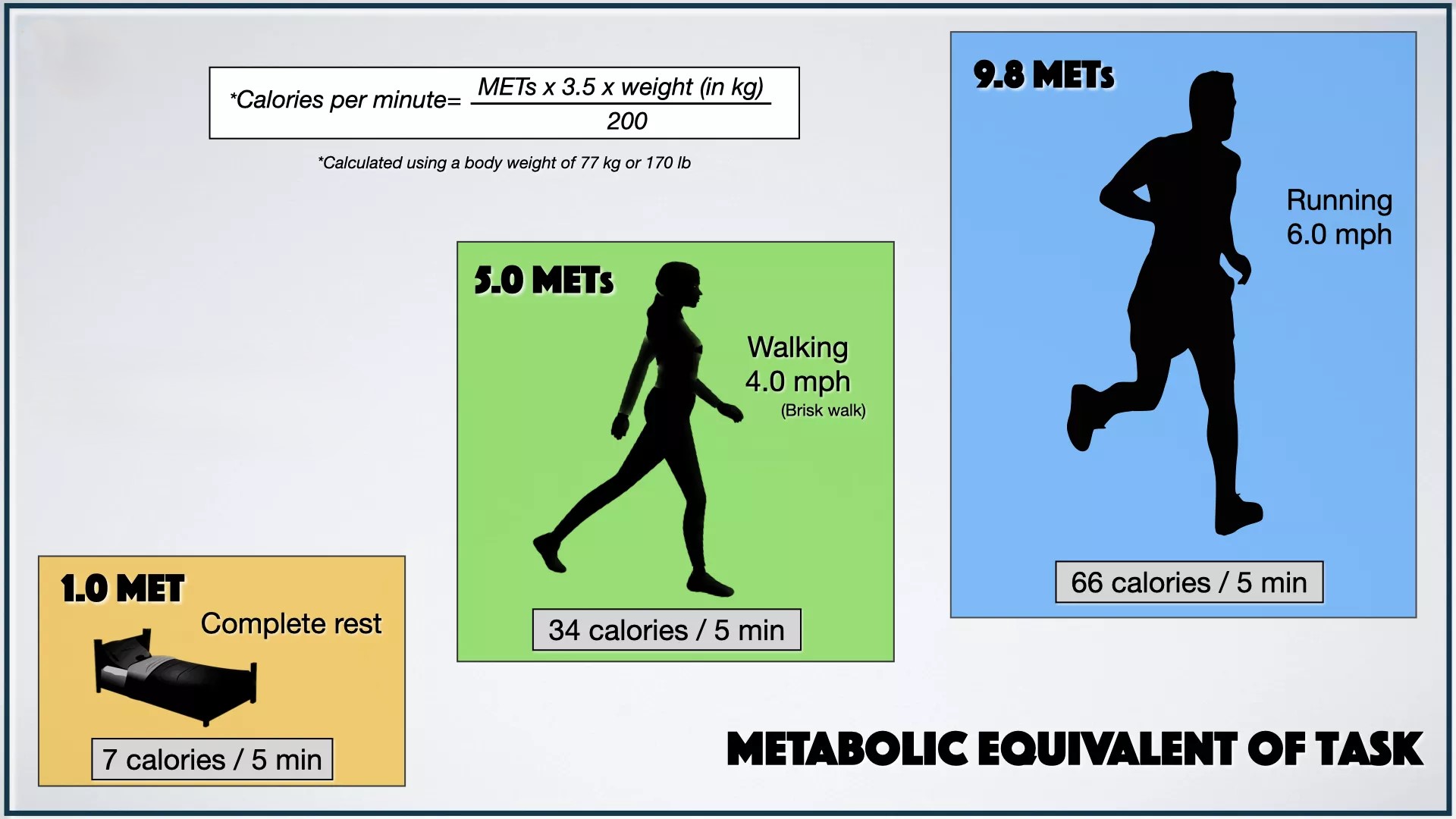
The functional abilities of cardiac patients can be classified in terms of metabolic equivalents (METs). The classification is generally as follows:
-
Light to medium housework is 2 to 4 METs
-
Heavy housework or yard work is approximately 5 to 6 METs
-
Strenuous activity would be 7 to 10 METs, etc.
To determine the limitations on a patient's functional abilities, the METs are considered in accordance with what symptoms are exhibited when the activities are carried out. For example, if a patient is performing activity at the 2 to 4 MET level and experiences dyspnea, fatigue, dizziness or fainting, the person is considered to have low functional abilities.
Tests
The heart to be transplanted may be preserved for a total of 4 to 6 hours in hypothermic storage. Before transplantation, the recepient's cardiac function and pulmonary status are assessed, and a match of heart sizes and blood group compatibility is made. A cytomegalovirus (CMV) positive donor would not be transplanted into a negative recipient.
Treatment
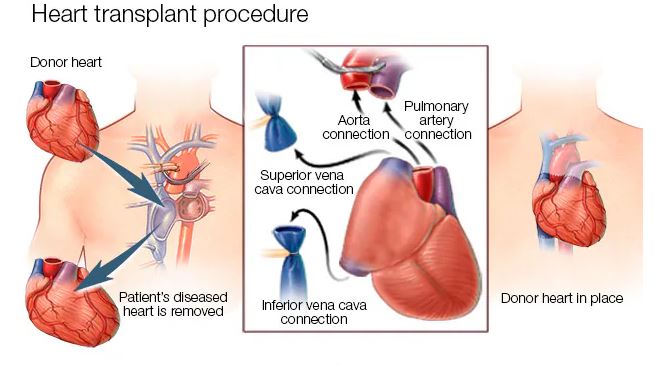
The transplant is the treatment. The surgeon removes the diseased heart and leaves the posterior wall of the right atrium in place and both vena cava intact. The posterior wall of the left atrium is kept in place with intact pulmonary veins. The donor heart is then attached and vessels are anastomosed.
Residuals
The donor heart's sinus node controls the rate of the transplanted heart, and maintains a rate of 100 to 110 beats/per/minute. Expectations are that the cardiac output will achieve 70% of maximal for one's age and be sufficient for everyday life stresses. The lifelong administration of immunosuppressive drugs is a hazard, and complications of infection and rejection dominate the causes of death. Other major causes are graft arteriosclerosis and lymphoma malignancy.
Special Considerations
-
A minimum thirty-percent is assigned.
-
May be entitled to special monthly compensation where the Veteran has a single service-connected disability rated as 100% with additional service-connected disability or disabilities independently ratable at 60% or more, which are separate and distinct from the 100% service-connected disability and involves different anatomical segments or bodily systems. See 38 CFR 3.350 (i) (1) – Total plus 60% – Special Monthly Compensation (SMC).
Notes
-
Absent instructions otherwise in individual diagnostic codes, if there are cardiovascular and comorbid respiratory conditions that can be evaluated by Metabolic Equivalents (METs), only the disability from one body system may be evaluated using METs, while the disability involving the other body system must be evaluated by criteria other than METs.
-
One MET (metabolic equivalent) is the energy cost of standing quietly at rest and represents an oxygen uptake of 3.5 milliliters per kilogram of body weight per minute. When the level of METs at which breathlessness, fatigue, angina, dizziness, or syncope develops is required for evaluation, and a laboratory determination of METs by exercise testing cannot be done for medical reasons, a medical examiner may estimate the level of activity (expressed in METs and supported by specific examples, such as slow stair climbing or shoveling snow) that results in those symptoms.
-
For this general formula, heart failure symptoms include, but are not limited to, breathlessness, fatigue, angina, dizziness, arrhythmia, palpitations, or syncope.
-
One year following discharge from inpatient hospitalization, determine the appropriate disability rating by mandatory VA examination. Apply the provisions of 38 CFR 3.105(e) of this chapter to any change in evaluation based upon that or any subsequent examination.
-
The rating criteria for cardiovascular conditions underwent full-scale revision effective on November 14, 2021 and January 12, 1999. A regulatory change was effective August 13, 1998, updated criteria for cold injury residuals under 38 CFR 4.104, DC 7122. The changes are not considered liberalizing and should not be used as the basis for reduction unless the disability has actually improved.